 essays
The question changes before the answer does
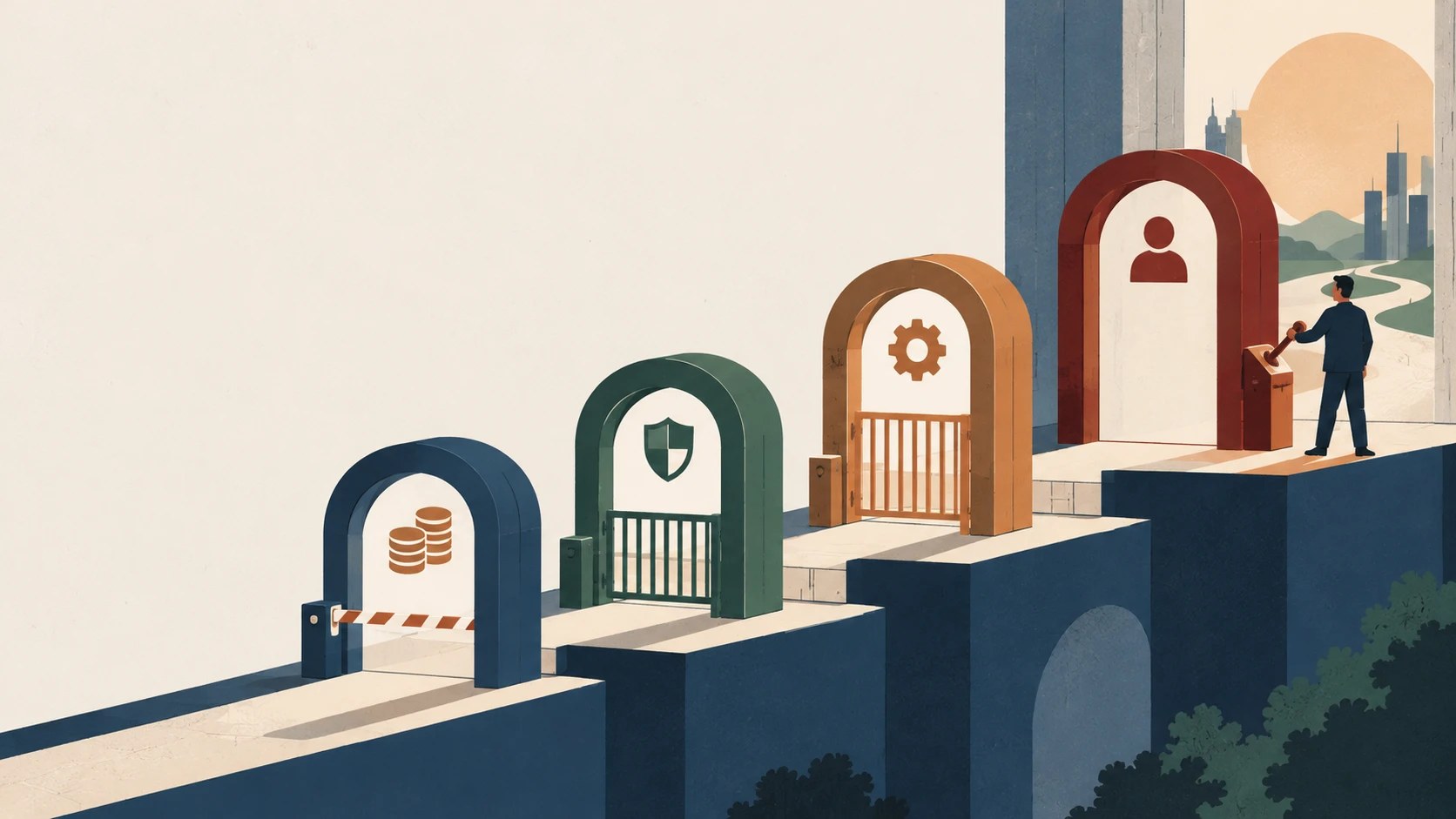
The first thing I asked an AI to do was small. Could it read a news article and tell me which company it was about. It could. So I asked it to do that for fifty articles, then to pull out the numbers, then to run every night while I slept. Each yes made the next question bigger, and somewhere around the third yes the question stopped being “could it do this” and became “what else.”
That is the first phase, and most people stop describing it there. You are testing the edge of a new tool, the edge keeps moving, and the only limit on what you try next is whether you can think of it. Creativity is the ceiling. It is a real ceiling and a good one, because it is yours.
The second phase is quieter, and it is the one that changed how I work.
Take the plainest version of what I built: a script that reads the news for me overnight and hands me a short list in the morning. Simple on paper. Then one night it hands me nothing. Or it hands me the same article three times. Or it works every day except Thursdays. I have been here a hundred times in a hundred different projects, and the feeling is always the same. I have looked at the same screen for two hours, I have tried the three things I know, and I am no longer thinking. I am just tired of the problem.
A person in that spot does one of two things. They quit for the night, which is fine, or they start changing things at random to make the discomfort stop, which is how a small bug becomes a large one. Both are the ordinary response to being tired.
What changed is that the tool does not get tired of the problem. I paste in the mess and say it fails on Thursdays and I do not know why. It does not sigh. It tries the approach I had stopped being able to see, and it is usually a boring one, a date format, a time zone, a feed that publishes late on one day of the week. Sometimes it is wrong and the wrong answer costs a minute. Sometimes it is right, and the screen I was dreading becomes a screen that works.
Then comes the part that surprised me. I do not feel relief. I feel pulled. The thing that was a wall twenty minutes ago is now a door, and behind it is the next idea, the one I had shelved because I was too worn down to want it. If it reads the news, could it also flag what changed since yesterday. Could it tell me which story I would have missed. I am inspired again, and the inspiration did not come from rest. It came from getting unstuck.
That is the loop. Stuck, handed a new angle, unstuck, inspired, ask for more. The cycle time used to be days, because getting unstuck needed a night’s sleep or a friend who knew the subject. Now it is closer to an afternoon, and each lap hands you a small reward for taking another one. I would call it a dopamine loop without apologizing for the phrase. It is the same mechanism that makes a good game hard to put down, pointed at work you actually care about.
Here is the bull case at full strength, and it is not weak. A loop that turns every dead end into a new direction means more people finish more things. Projects that used to die on the tired afternoon now get one more try. The ceiling really is imagination.
Now the part I would not call durable. A loop that rewards you for continuing will, by construction, keep you continuing. The tool offers the fourth idea with the same enthusiasm as the first, and it has no opinion about whether you should stop.
What I can measure is the bill. My token spend has climbed every month since that first article, and the tool did not get more expensive. I got more willing. Each lap of the loop costs a handful of tokens and hands me a reason to start another, so the meter runs at the speed of my appetite. Fifty articles cost more than one. Every night costs more than fifty. Flagging what changed since yesterday costs more again.
Look at what that does to the old limits. Capability stopped being the constraint a while ago. Stamina stopped being the constraint when the tool took over the tired afternoons. What is left is a plainer question, and it is the one I keep arriving at: how much more work do I want to give it?
That is the limit every other kind of labor has had. A bigger crew costs more, a longer project costs more. The difference is that nobody on this crew asks for a day off, so the only person who can say enough is the one paying for the tokens. The Thursday bug took me an afternoon to dread and a few minutes to fix, and I have been finding new work to give it ever since. I do not know where my own number tops out.
An essay on how the author works. It makes no forecast and nothing in it is investment advice.