
The only tension that matters
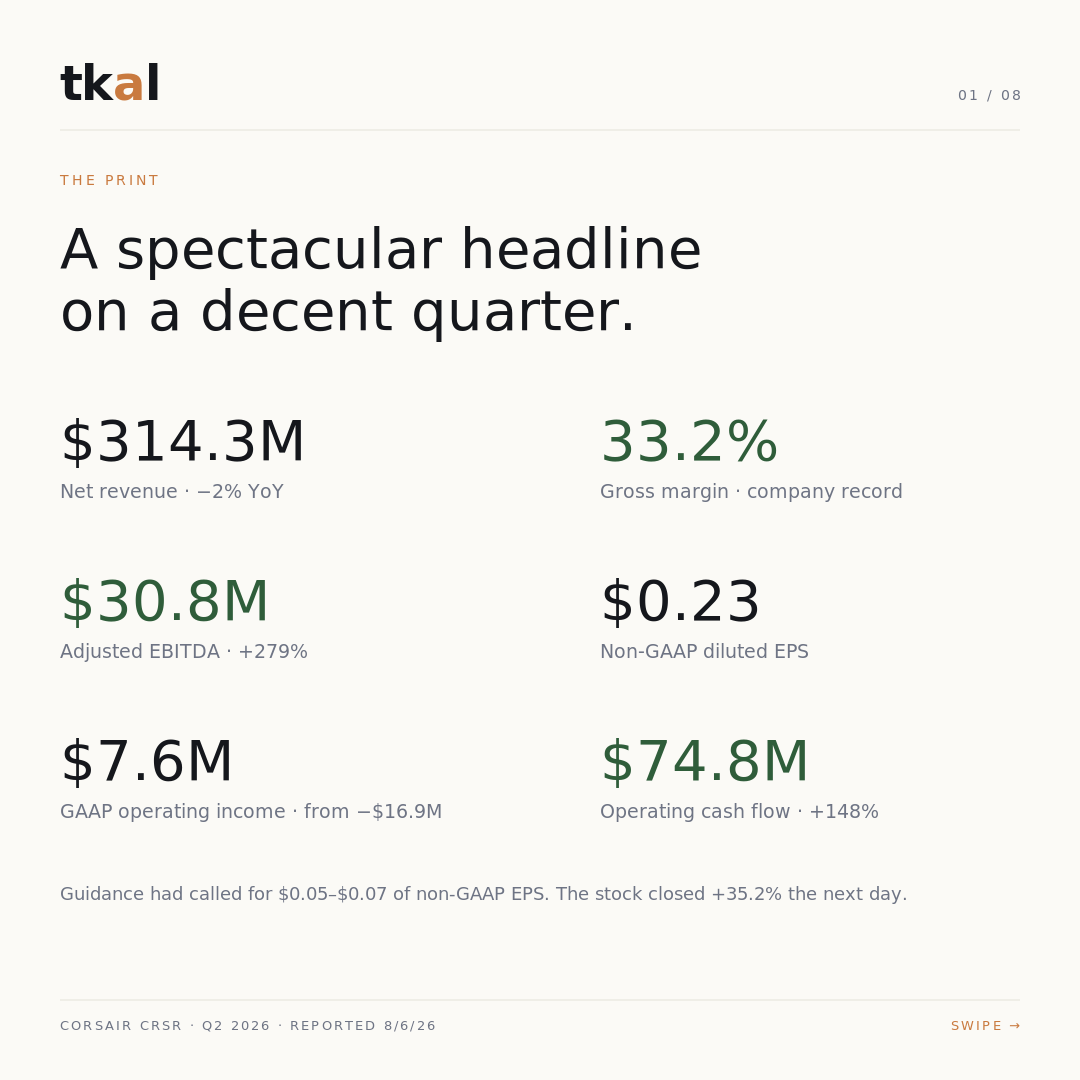
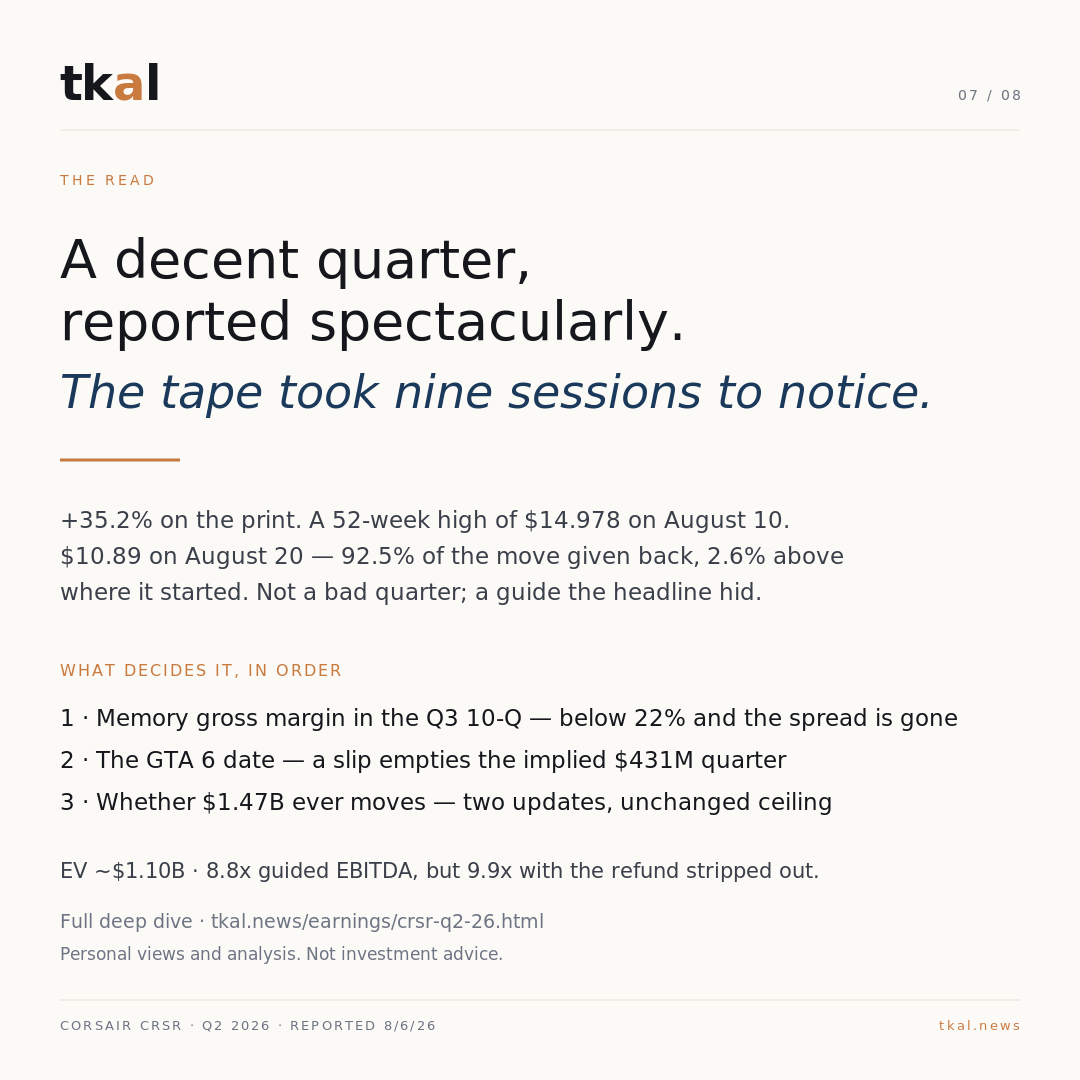
On , Corsair reported a company-record gross margin of 33.2%, gross profit up 21% to $104.3 million, adjusted EBITDA up 279% to $30.8 million, and a swing from a $16.9 million GAAP operating loss to $7.6 million of operating income. Non-GAAP diluted EPS of $0.23 came in at more than three times the high end of a guided range of $0.05 to $0.07. The stock opened the next session at $12.68 against a $10.61 pre-print close and finished the day at $14.35, up 35.2%.
Nine sessions later it trades at $10.89. That is 92.5% of the move given back, and it is the most honest piece of analysis anyone has published on this quarter. Because the release also contains this paragraph, and it is the whole print:
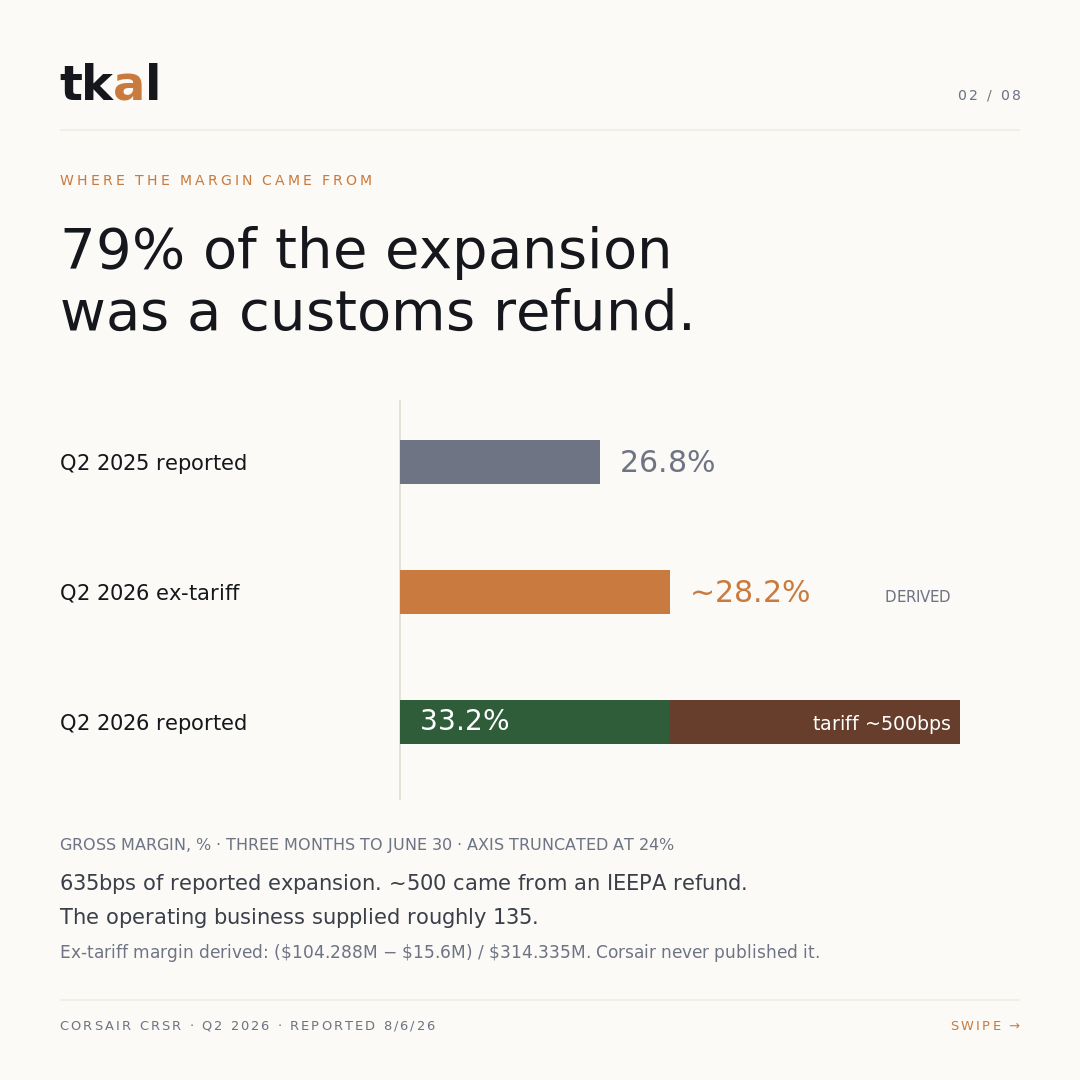
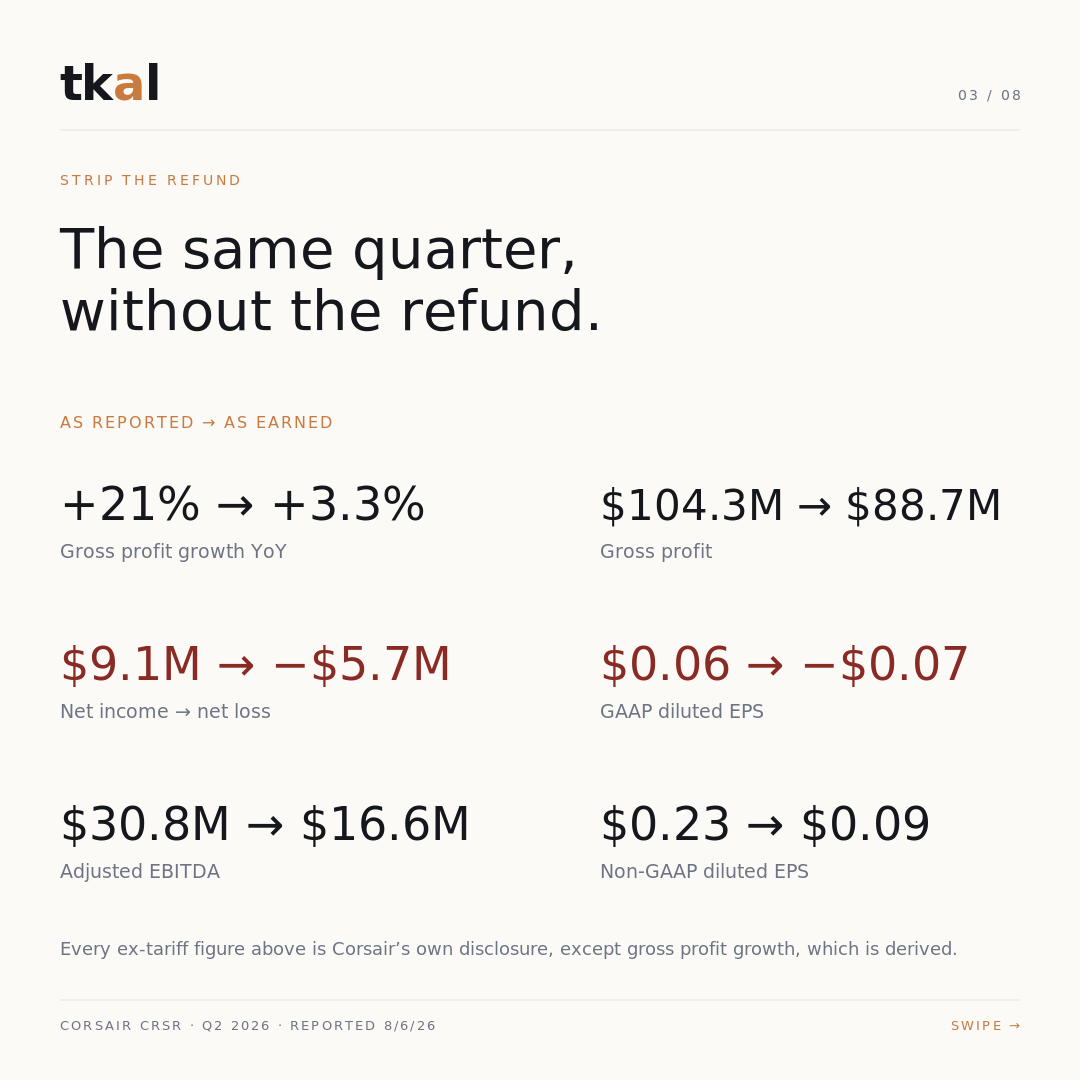
"During the second quarter of 2026, the Company recognized a benefit of approximately $15.6 million to GAAP gross profit from refunds of tariffs previously paid under the International Emergency Economic Powers Act. This delivered approximately 500 basis points of benefit to gross margin. … Excluding this benefit, net loss would have been $5.7 million and GAAP diluted loss per share would have been $(0.07)."
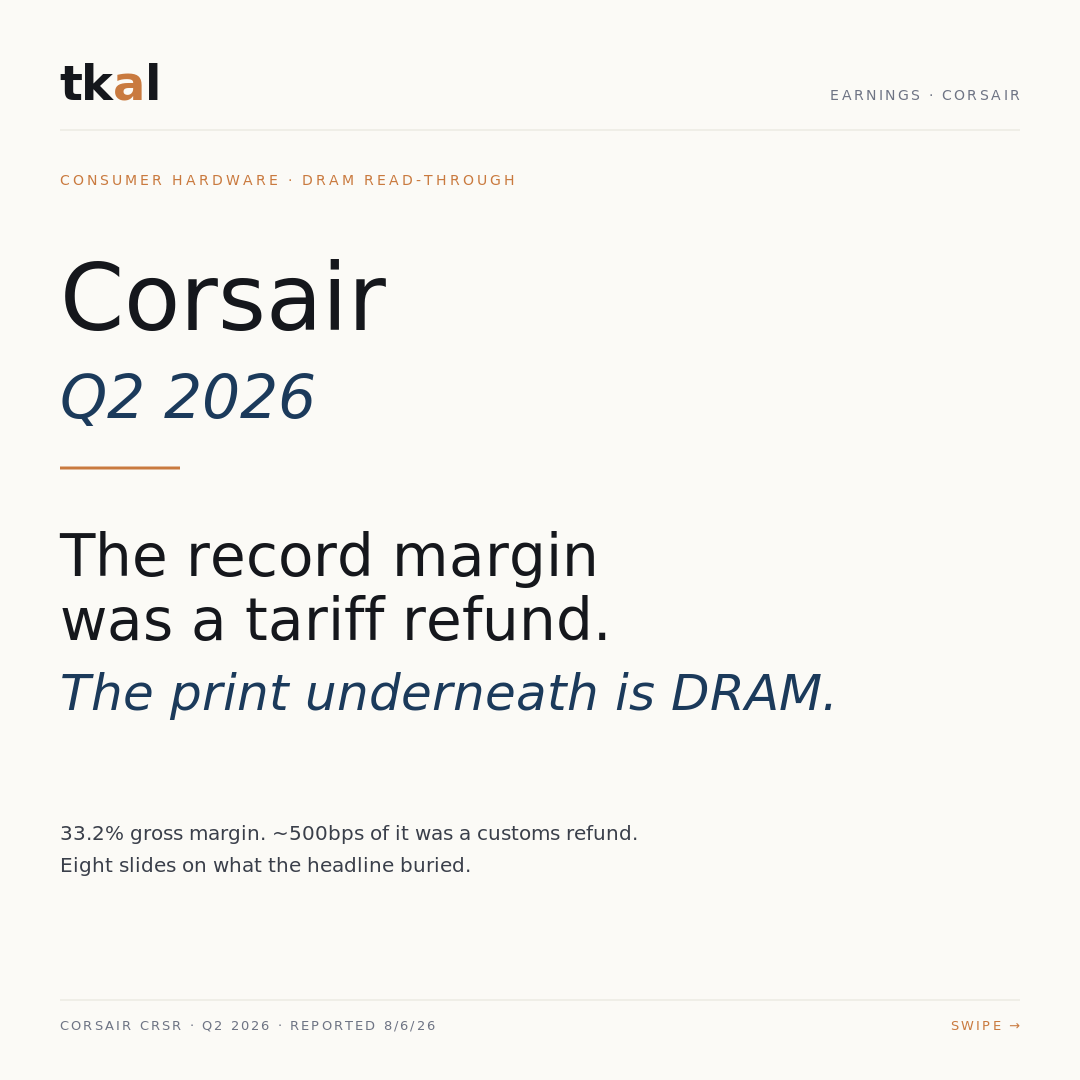
Decode it. The record margin was a customs refund. Reported gross margin expanded 635 basis points year over year; the refund supplied approximately 500 of them. That is 79% of the entire expansion arriving from a line item the same release describes as "materially complete." It does not recur. It was never operating income in the first place — it was Corsair getting back money it had already paid.
Run the same subtraction through gross profit and the quarter changes character. Reported gross profit grew 21%. Ex-refund it was $88.7 million against $85.9 million — up 3.3%. On revenue that fell 2%. That is a company holding its ground on price and mix in a hostile quarter, which is a real and creditable thing. It is not a 21% gross-profit inflection, and the record belongs to the customs office.
Peripherals says gamers are fine. Components says builders are not.
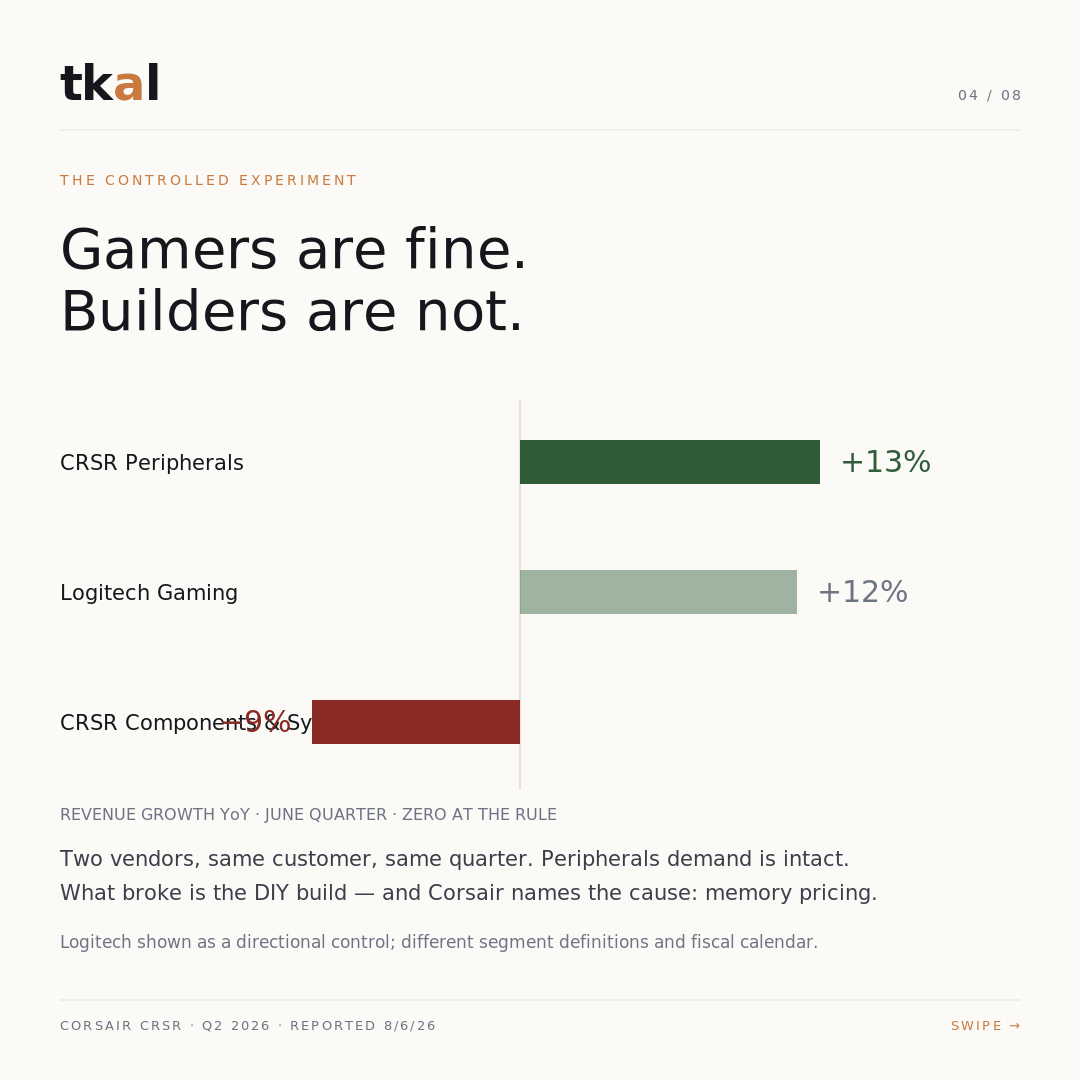
The segment split is where this print earns its place in the memory file, because it is a controlled experiment. Both segments sell to the same customer — the PC gamer — through the same channels, in the same quarter, under the same tariffs and the same macro. One grew and one shrank.
Gamer and Creator Peripherals: $115.9 million, up 13%, gross profit up 27% to $52.0 million, gross margin 44.9% against 40.0%. Gaming Components and Systems: $198.5 million, down 9%. The company's explanation is one sentence and it does not hedge: "Higher memory pricing continued to weigh on the market for DIY PC builds and standalone components, which shrank year-over-year during the quarter."
Corroboration arrives from outside the building. Logitech's gaming revenue for its June quarter grew 12% year over year to $354.2 million — a near-match for Corsair's 13% peripherals line, from a company with no meaningful DIY-components exposure. Two independent vendors, same demand signal: the gamer is spending. The gamer is simply not buying a motherboard, a case, a cooler and four sticks of DDR5 to put them in.
This is the cleanest public receipt I have seen that the 2026 DRAM squeeze has crossed from a cost story into a volume story at the consumer end. It is not an inference from channel checks. It is two segments of one P&L, printed side by side, diverging by 22 percentage points of growth.
The rest of this dive is for paid subscribers.
The headline numbers are above. The 8 sections below carry the mechanism, the peer read, the valuation work, and the dated tests that decide it.
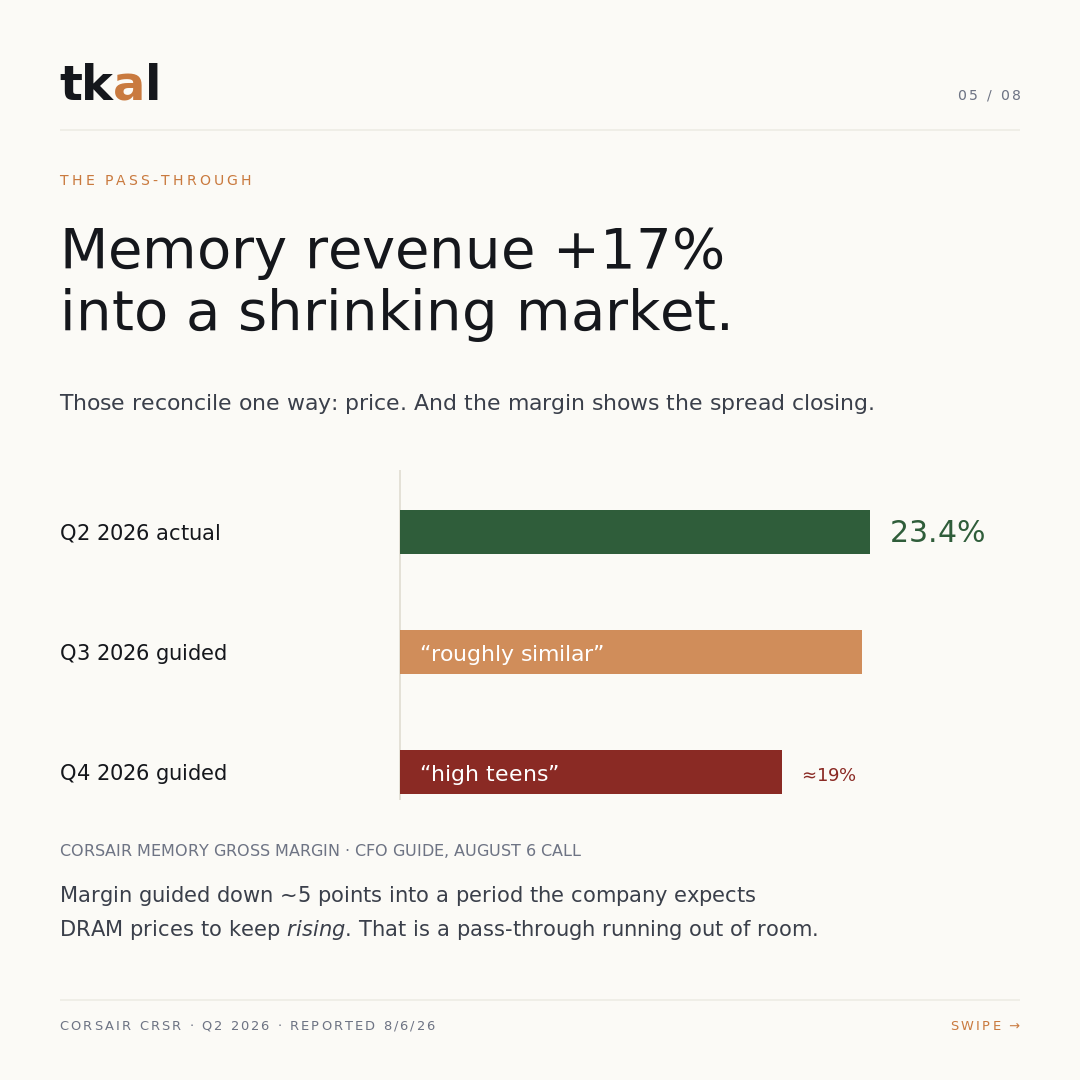
- Memory revenue grew 17% into a market that shrank
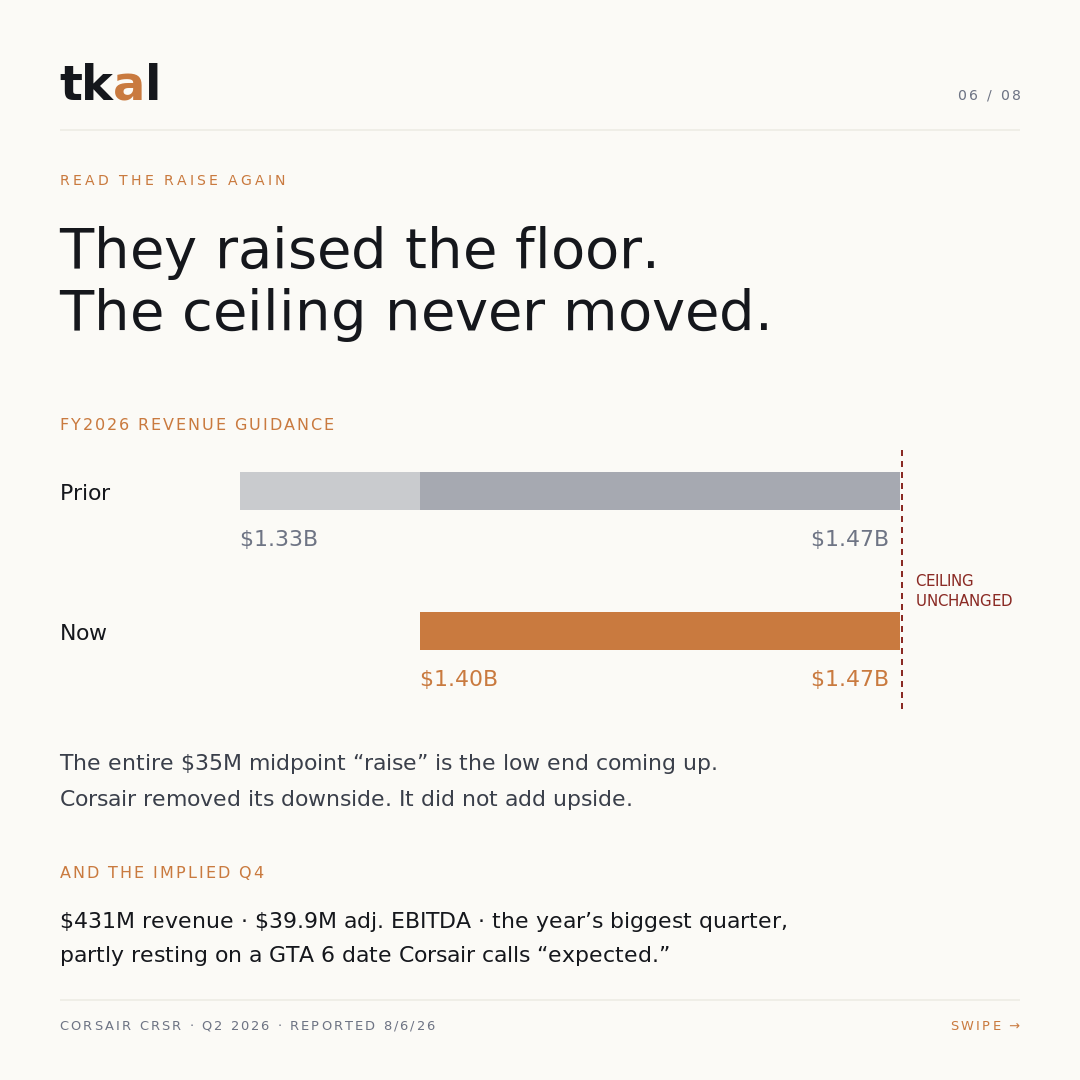
- The raise lifted the floor, not the ceiling
- How peers read this
- Valuation reality check
- The tape already voted
- What we'd watch from here
- The trade
- Bottom line
Already a subscriber? Sign in.