
The setup
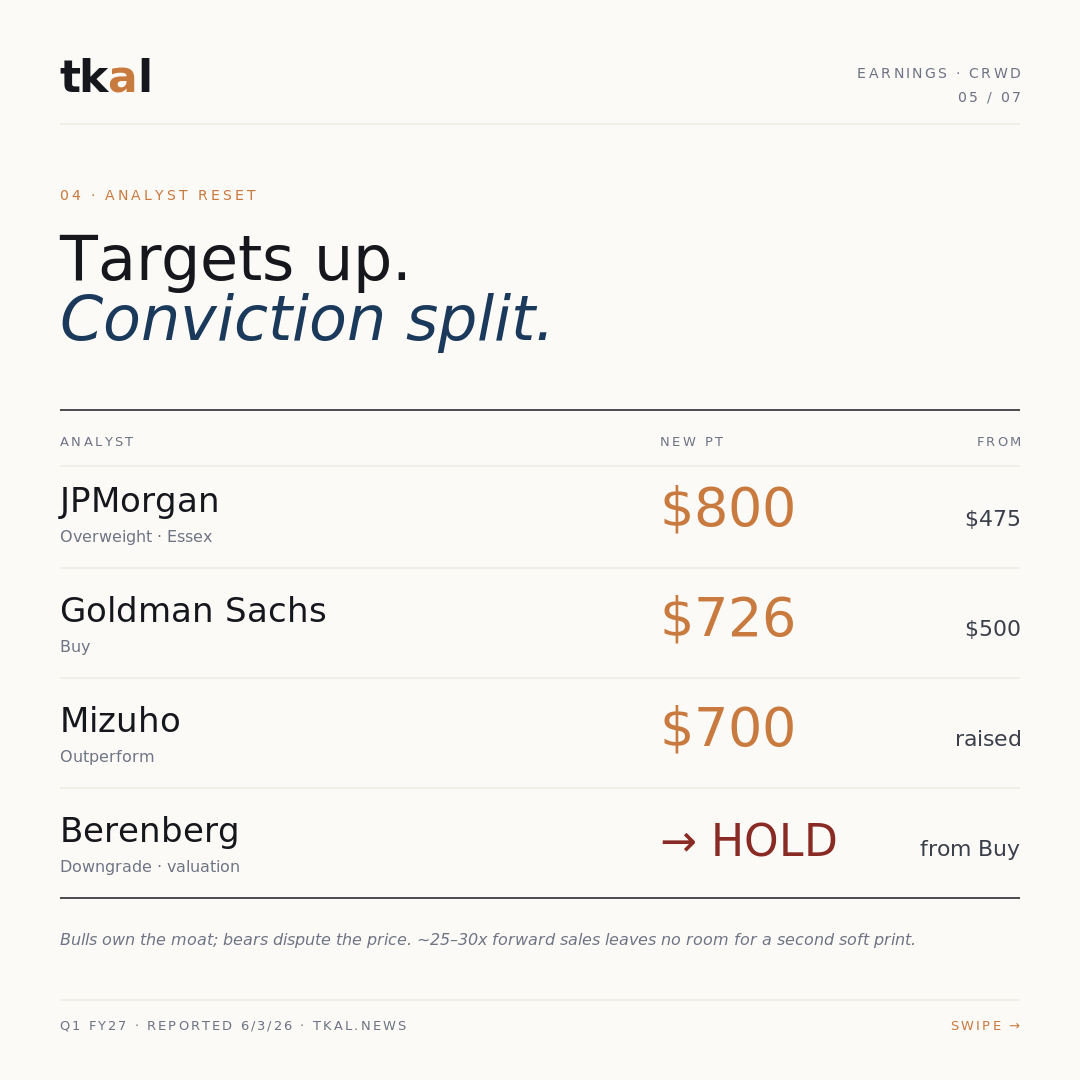
CrowdStrike walked into its Q1 FY27 print (quarter ended , reported after the close on ) carrying the single hardest expectation in software: a stock up roughly 65% year-to-date, trading near $748 into the close, against a street average target down around $564. That is the textbook "priced for perfection" setup — the bar isn't the published consensus, it's the buy-side whisper that already assumes a beat-and-raise. The story coming in was clean: the outage was firmly in the rear-view, retention had healed, and the AI-security narrative had become the reason to own the name rather than a nice-to-have. The risk was never the quarter. It was the price of the quarter.
The numbers
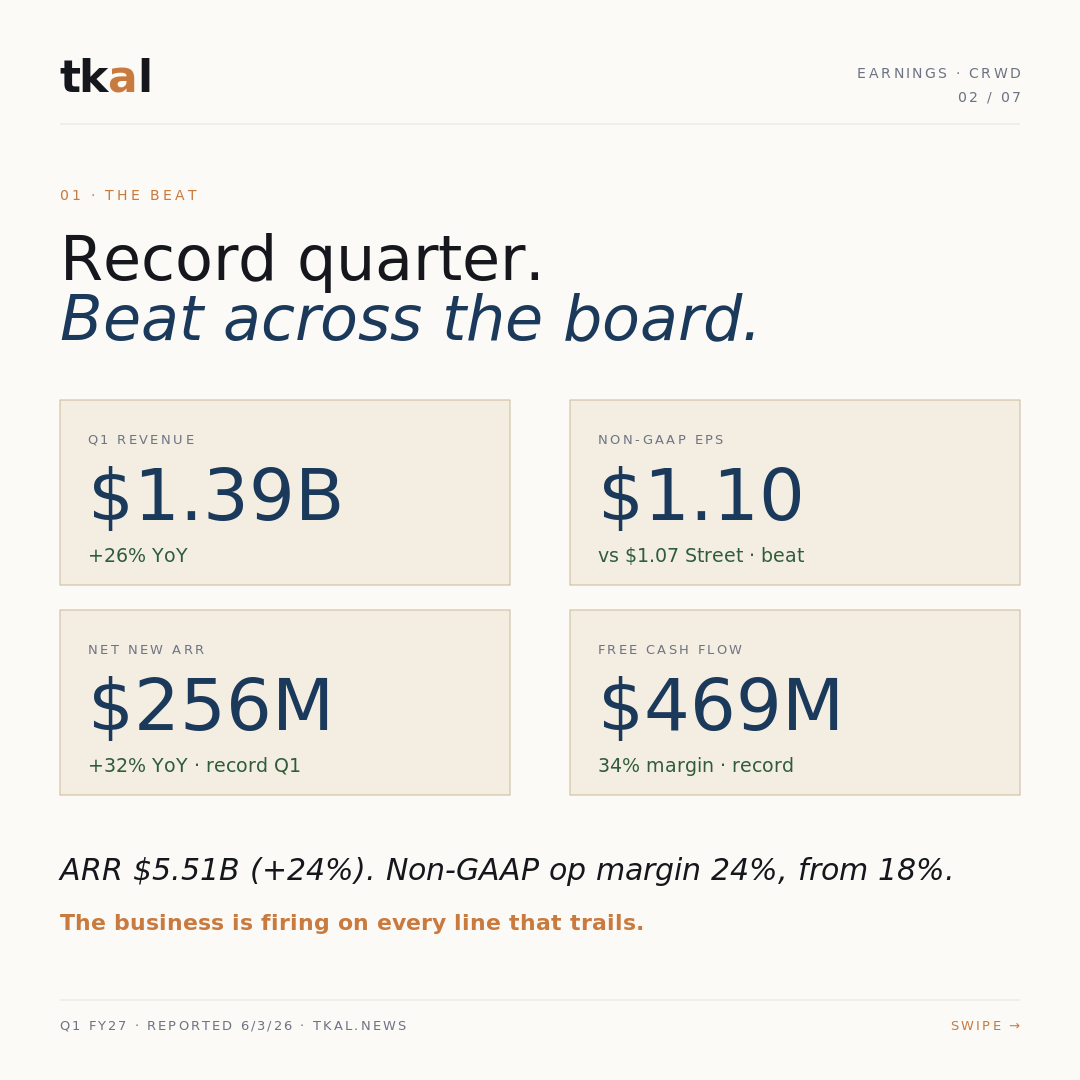
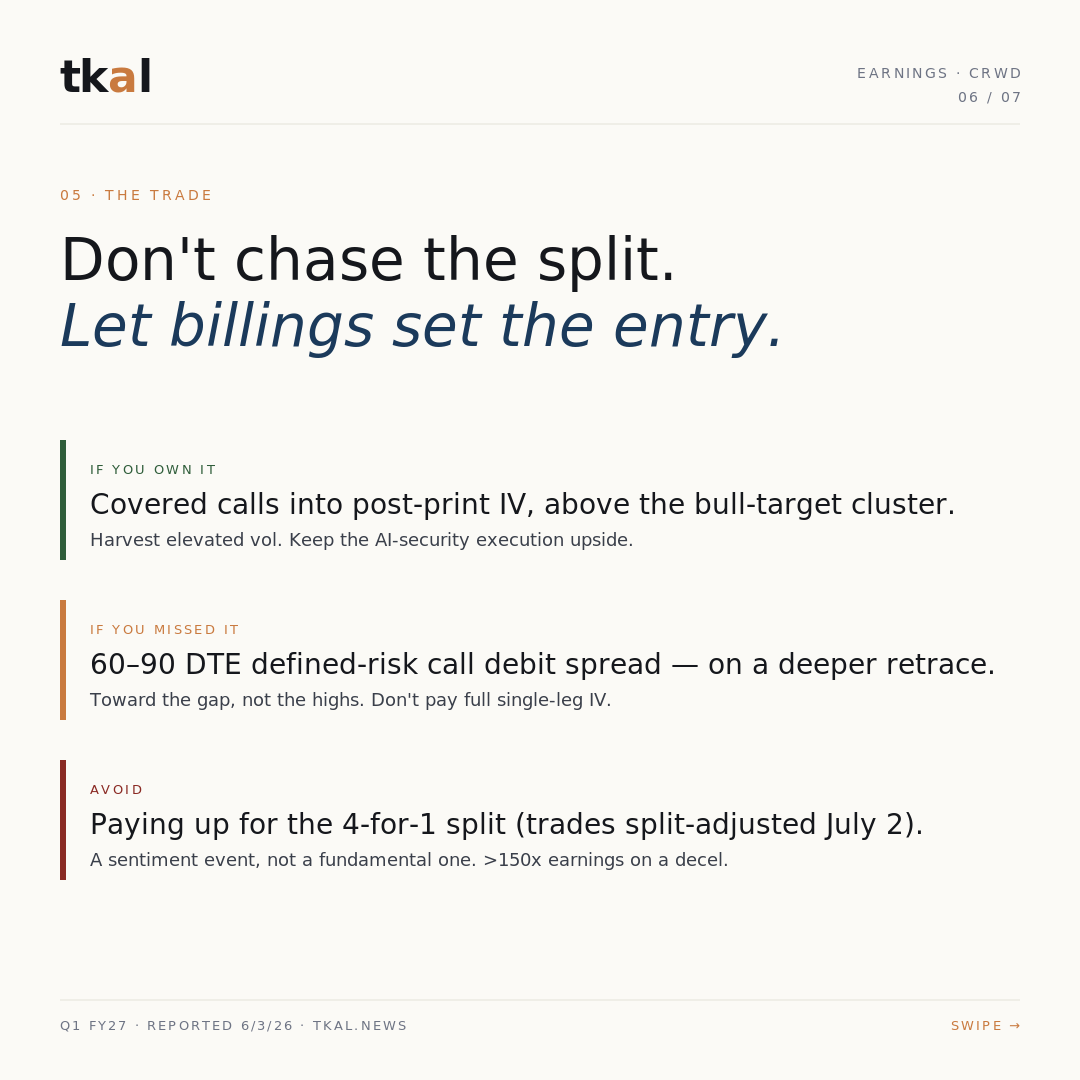
The headline lines beat. Total revenue was $1.386B, +26% YoY (subscription $1.321B, also +26%). Non-GAAP EPS was $1.10 versus $0.73 a year ago and roughly $1.07 consensus. ARR reached $5.51B, +24%, with record Q1 net new ARR of $255.8M, +32% YoY — the metric management most wants you to anchor on. Profitability and cash were the real standouts: non-GAAP operating margin hit 24% (from 18%), record operating cash flow of $590.9M, and record free cash flow of $468.5M — a 34% FCF margin. Non-GAAP subscription gross margin was 81%. GAAP swung to a small profit ($27.8M, $0.11/sh) from a year-ago loss. Management raised the FY27 net new ARR growth guide to ~27.7% at the midpoint (+520 bps), lifted full-year revenue to $5.91–5.96B and non-GAAP EPS to $4.88–4.96, and announced a 4-for-1 stock split (record date , effective , split-adjusted trading ).
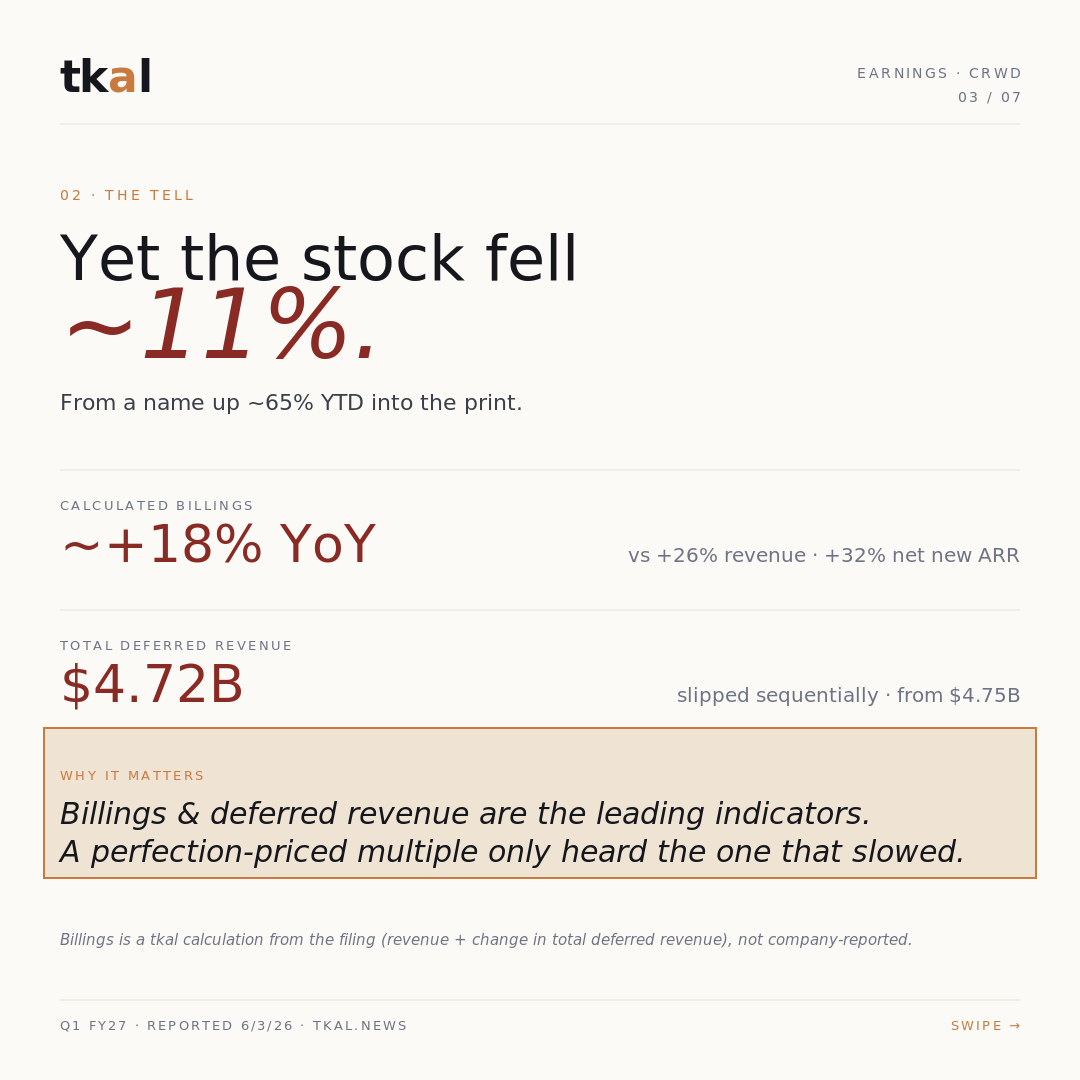
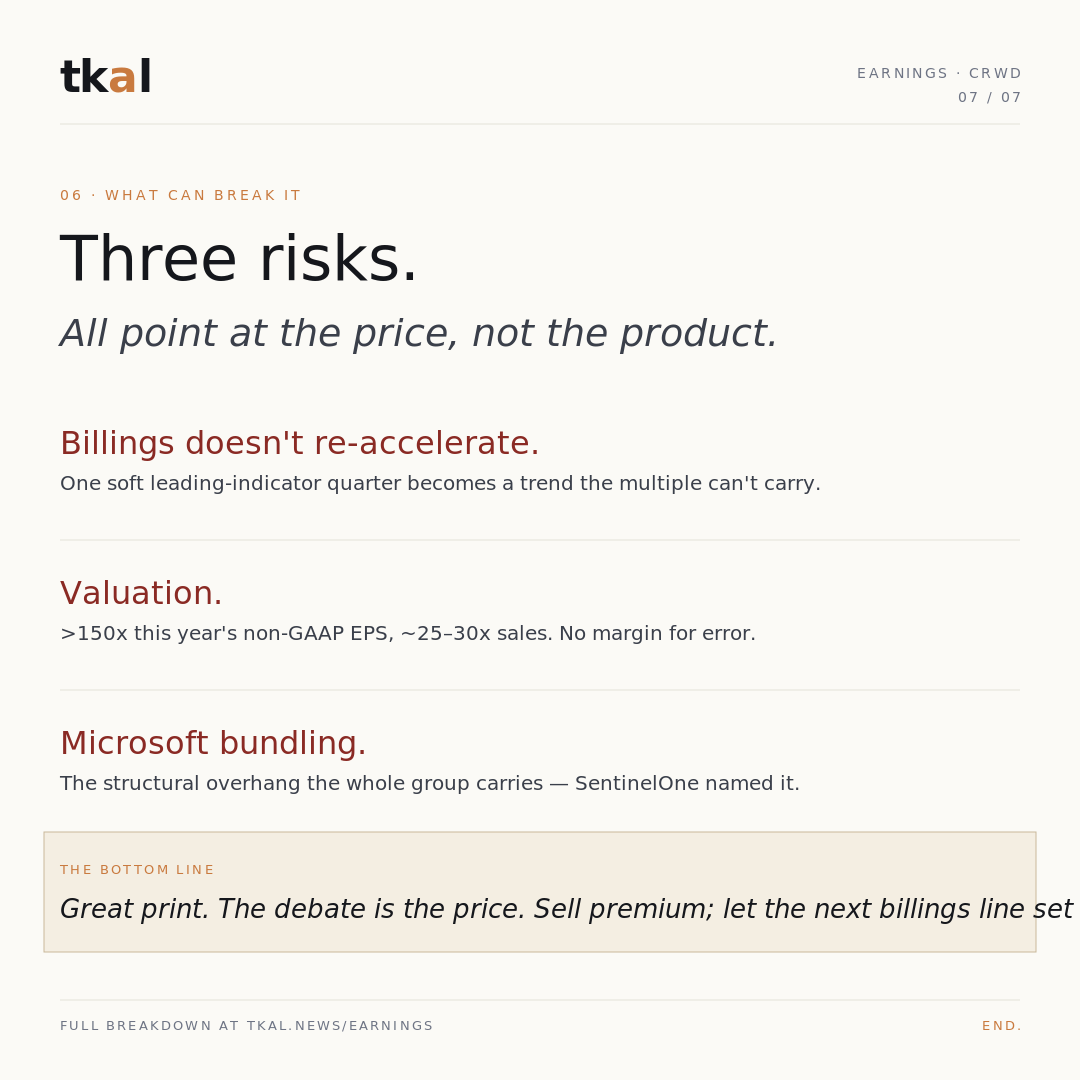
So why the drop? The tell was billings. Calculated billings landed near $1.35B, up only ~18% YoY — a clear deceleration against 26% revenue and 32% net-new-ARR growth — and total deferred revenue actually declined sequentially (to $4.72B from $4.75B at year-end). For a subscription business, deferred revenue and billings are the leading indicators; ARR and revenue are the trailing ones. A market that has already paid for acceleration will fixate on the one series that decelerated, regardless of how loudly management points at net new ARR. (Billings here is a tkal calculation from the filing — revenue plus the change in total deferred revenue — not a company-reported figure.)
The rest of this dive is for paid subscribers.
The headline numbers are above. The 6 sections below carry the mechanism, the peer read, the valuation work, and the dated tests that decide it.
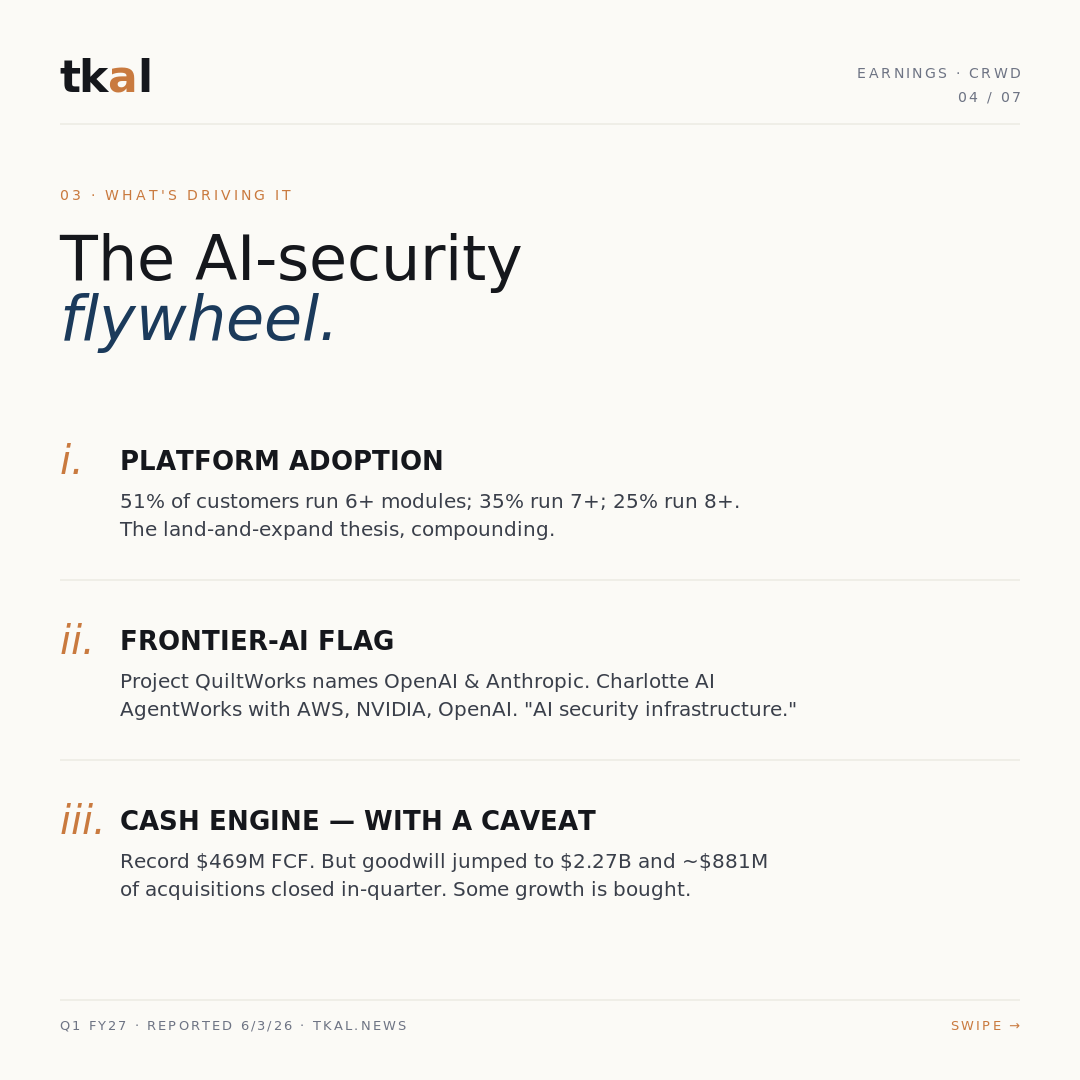
- What's actually driving it
- How peers read this
- Valuation reality check
- What we'd watch from here
- Listed-market read-through
- Bottom line
Already a subscriber? Sign in.