From the editor
tkal is a daily synthesis of the credit, demand, and capex cascades I've been running for myself. Receipts published weekly: every dated call gets graded, blindly, against what actually happened. The premise is that most market writing is unfalsifiable by design — vague enough to be re-narrated after the fact. This is the opposite. The conviction level is on the call. The horizon is on the call. The falsifier — the thing that would prove it wrong — is on the call. If the call misses, it's in the scorecard. If it hits, also in the scorecard. The newsletter is what the model saw this week; the scorecard is whether the model has been right. Not investment advice. Positions may exist in the names discussed.
The Read
AI memory repriced for 2027 this week while the consumer channel turned down; HBM is the one clean up-signal, and the -8 spot reopen tests everything else.
ai memory reprices, the channel turns down
01 · Signal
2027 hbm reprices higher, and the book is locked
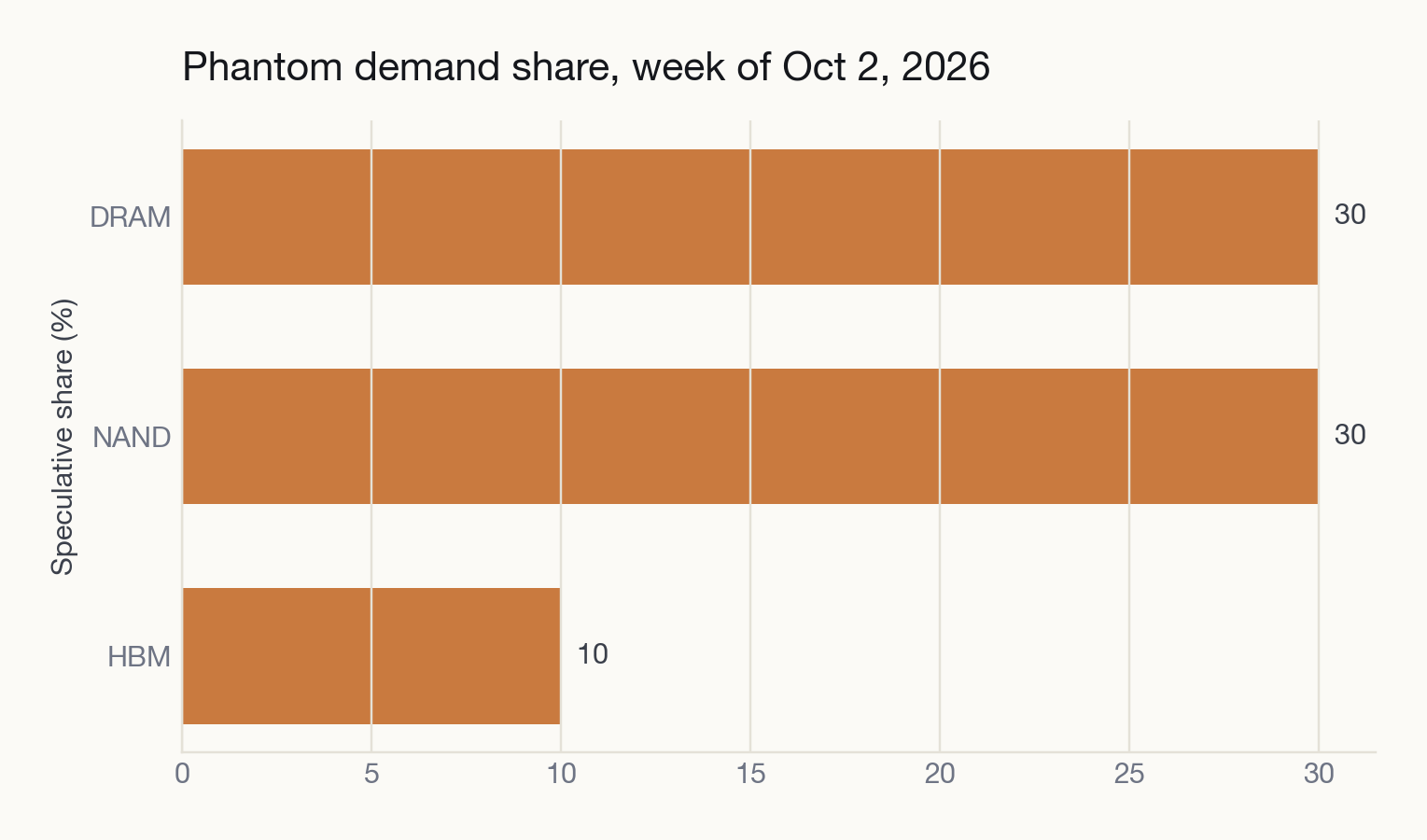
Micron raised calendar-2027 HBM pricing after fixed 2026 contracts kept it out of this year's surge, and disclosed 26 take-or-pay strategic customer agreements with banded pricing running through 2030. Samsung is reportedly quoting 2027 HBM4 at more than three times HBM3E, with talks closing in October. TrendForce, via Chosun Biz, reads the same reset independently. Demand quality is genuine, and HBM carries the lowest speculative share in the book at 10%.
HBM is the cleanest up-signal in the book. The test is Samsung's settlement, due by end-October.
02 · Signal
the consumer channel trades price for volume
On the commodity side the demand read moved to early downcycle. DDR5 die spot posted its first monthly decline after five rises. DDR4 is in a second correction wave, and Nanya and Winbond shares fell with it. Consumer NAND inventory is building, wafer prices are falling, and client SSD contract now sits above spot. Server DDR5 RDIMM spot stays near record highs, so the split runs inside DRAM itself.
Blended DRAM strength hides two markets. Servers still pull; PCs and phones hit the price buyers will pay.
03 · Signal
china's makers keep taking the domestic volume
TechInsights puts YMTC at about 13% of global NAND revenue in Q2 2026, up from about 2% five years ago. CXMT's investment program, R&D plus a back-end test base, was approved on . GigaDevice raised its 2026 related-party DRAM budget with CXMT by 37.5% and pre-booked early-2027 volume. That is domestic China volume moving away from the tracked vendors, at the same time Chinese cloud buyers digest the server DDR5 they stocked in the first half.
The share China takes at home is share the tracked vendors no longer price.
The Call · HBM Up, Channel Down
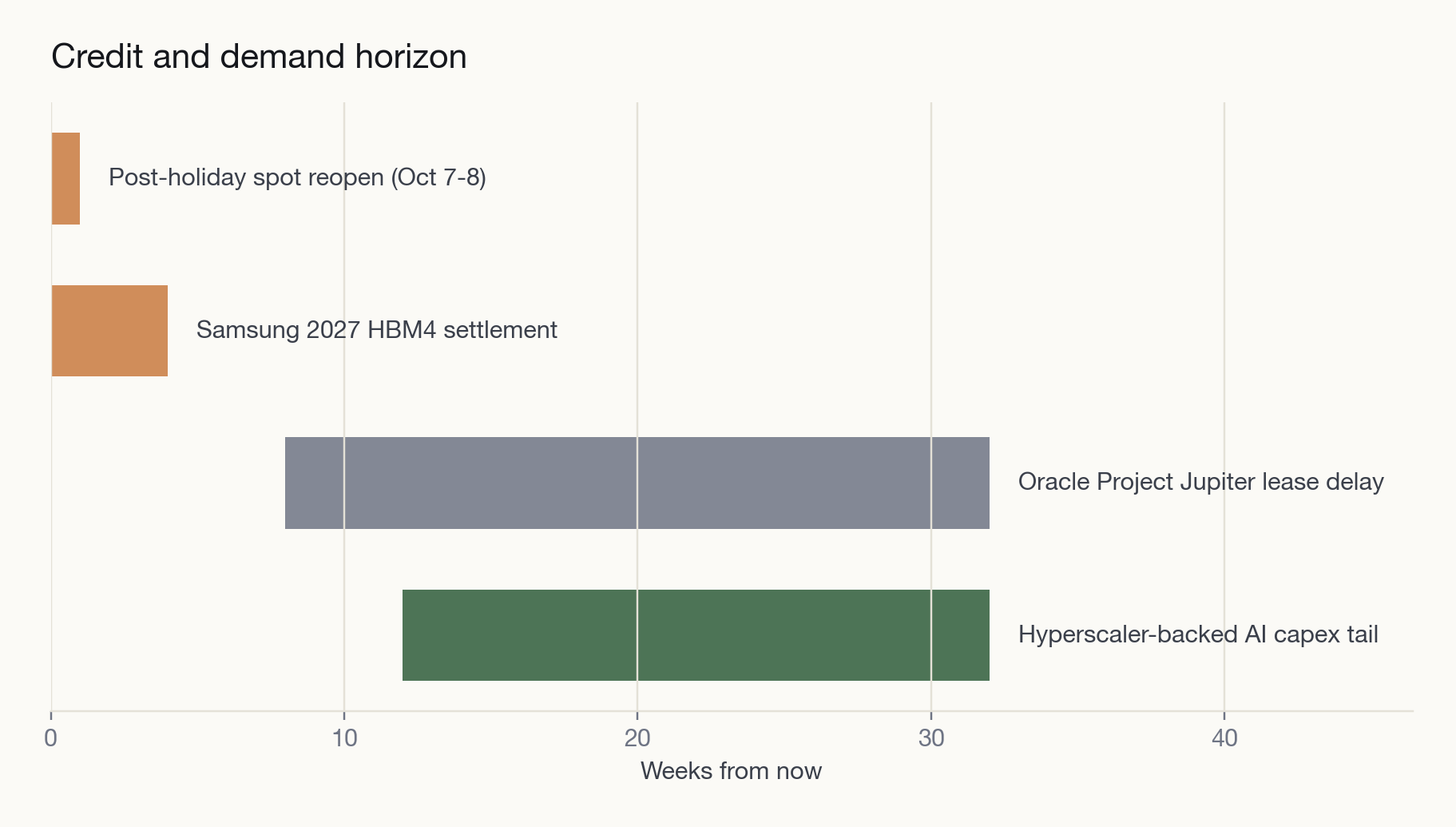
The durable lane is 2027 HBM, repriced by Micron and reportedly by Samsung, while consumer DRAM and channel NAND roll over. Samsung's 2027 HBM4 settlement, due by end-October, confirms or breaks it.
At the -8 post-holiday spot reopen. Treat the late-September DRAM uptick as holiday-thin, not as demand. A week-over-week drop in DDR5 die or NAND wafer spot confirms commodity demand destruction. China quotes were suspended for National Day, so the week's last prints are pre-holiday. DDR4 is already in a second correction; Nanya and Winbond are the names most exposed to that unwind.
§
By the end-October Samsung HBM4 settlement. The settlement is the one print that can confirm or break the 2027 HBM repricing. A settlement near the reported quote keeps HBM the cleanest lane; a low one breaks the call. Micron has raised 2027 HBM pricing and is moving NVHBM and HBM4E to foundry base dies. Netlist's ITC complaint against Micron HBM is pending institution, a separate risk to the Micron read.
§
Between late and mid-2027. Credit stays STABLE. Read Oracle's delayed Project Jupiter lease as one soft event, not a trend; a second verified stress event would move conditions to TIGHTENING. The lag runs 8 to 32 weeks, centred on late , and reaches HBM, server DDR5 and enterprise SSD demand. Lambda's verified new loan sits on the other side of the ledger.