From the editor
tkal is a daily synthesis of the credit, demand, and capex cascades I've been running for myself. Receipts published weekly: every dated call gets graded, blindly, against what actually happened. The premise is that most market writing is unfalsifiable by design — vague enough to be re-narrated after the fact. This is the opposite. The conviction level is on the call. The horizon is on the call. The falsifier — the thing that would prove it wrong — is on the call. If the call misses, it's in the scorecard. If it hits, also in the scorecard. The newsletter is what the model saw this week; the scorecard is whether the model has been right. Not investment advice. Positions may exist in the names discussed.
The Read
The pipeline ran two nights of seven this week, so the split between the server lane and the consumer lane is still there and nothing in it can be tested.
the split held, the test did not
01 · Signal
the week the pipeline could not check itself
Two of seven L1 nights and two of seven L1D nights reached the layer, against seven of seven a week ago. Nineteen evidence items arrived where forty-three arrived last time. Every supply belief in this run traces back to a single catch-up sweep on with no repeat observation behind it. The risk layer scored four, declined to clear the pipeline for synthesis, and the synthesis ran anyway on the rollup schedule. Five events at severity four or five went unprocessed by the belief layer.
A risk score of four with no trigger fired is the system reporting that it could not falsify itself.
02 · Signal
record revenue, and the bits still went quiet
IDC put worldwide server revenue at a record $166.3B in the second quarter, up 52% on unit growth of 15.4%. Accelerated units fell 10.8% in the same print while average selling prices rose 43.6%. That is value growth consistent with roughly flat bits. External enterprise storage grew 33.6% in the same quarter, and IDC named the motive in its own release: buyers pulling purchases forward to secure budget before further price rises. WPG Holdings posted record August revenue up 80.5% with no bit attribution attached.
The money is measured every quarter. The bits are the one number nobody publishes.
03 · Signal
enterprise held, the channel starved
The two storage tiers now read in opposite directions off the same adapter: enterprise at plus 1.7, channel at minus 2.12. Distributors have stopped restocking and quoted channel NAND sits more than 20% above where parts actually trade. German retail DDR5 is up 370% in a year, and makers are cutting specs rather than raising prices again. Cost-side demand destruction is confirmed from four independent directions this week. Volume-side, from none. No unit cut has been shown anywhere.
Four independent reads say buyers cannot pay. Not one says a buyer cut an order.
The Call · Unfalsifiable, Not Falsified
Reversal risk sits at its ceiling of four with zero triggers fired, which is the system reporting that it could not test itself rather than that something broke. The shape of the market hardened in place this week: server DDR5 and enterprise TLC still carry positive demand against positive supply terms, while client DDR5, client DDR4, all three mobile DRAM lanes and channel QLC read down. Treat that as the prior week's finding surviving, not as this week's evidence.
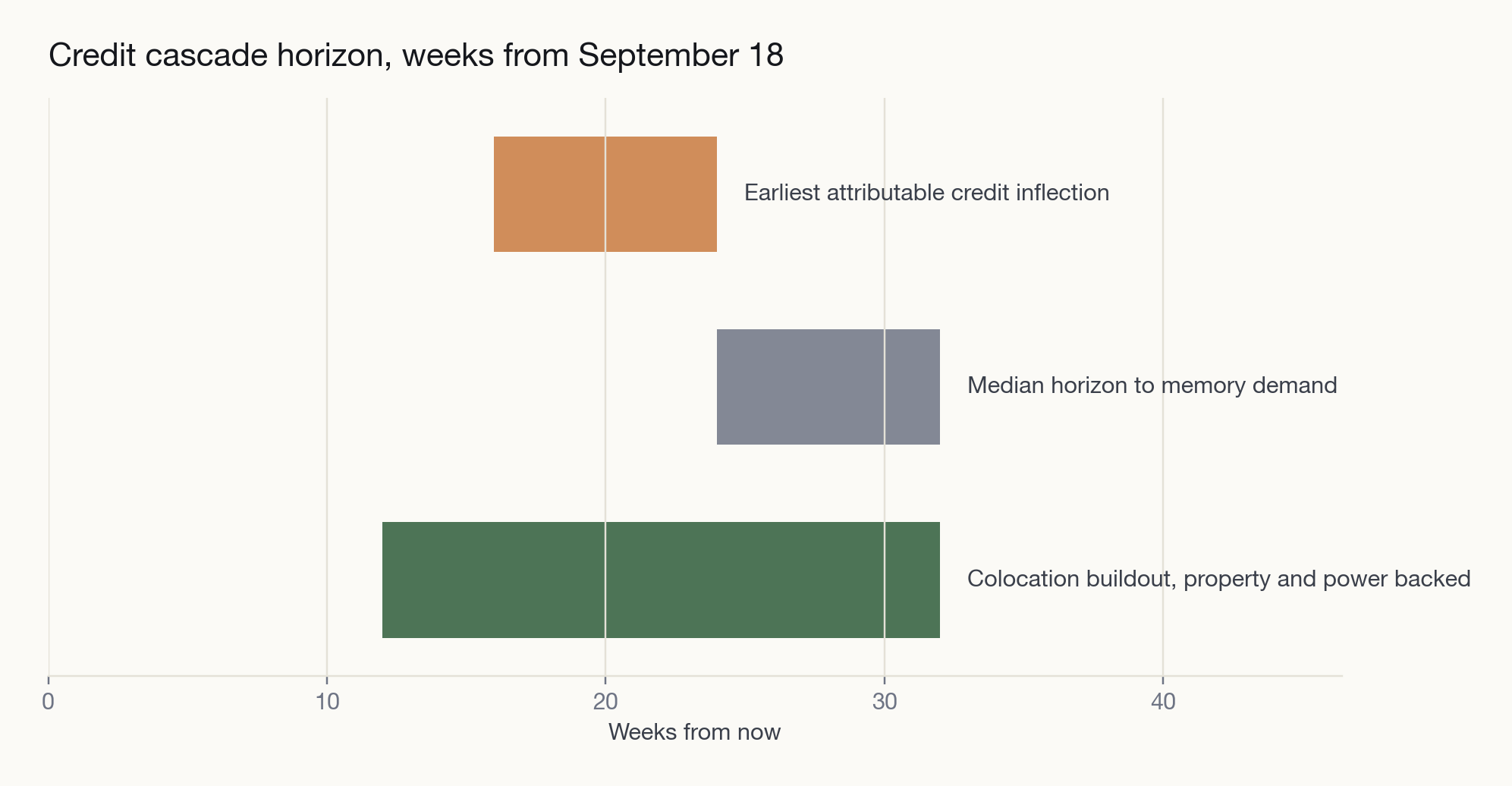
Before the Micron Taiwan mediation outcome lands. A supply-side interruption is the one path by which this week's price firmness gets a physical cause rather than a thin-volume one. Watch Micron, and watch whether any DRAM supply belief survives a second observation. A union covering more than 80% of the Taoyuan and Taichung workforce has threatened a strike vote if the and 21 mediation sessions fail. Every DRAM supply belief in this run rests on one catch-up sweep dated with no recurrence test behind it. The falsifier is a second week of collection that fails to reproduce it.
§
Before the 1Q27 contract print settles. The durable lane to be positioned for remains enterprise and datacenter, not the commodity tier. Do not average server DDR5 and enterprise TLC into one read with client DDR5, client DDR4, mobile DRAM and channel QLC, which all read down with reversal risk at its ceiling. The graph's only severity-5 event this week was a named-subtype 1Q27 contract print, and it went unprocessed by the belief layer. It is also precisely the evidence the decision layer said would unblock its two largest no-decision records. Watch Samsung, SK hynix, Micron, Kioxia and SanDisk. The falsifier is a 1Q27 print that moves the enterprise and channel tiers the same way.
§
Before the next hyperscaler capex disclosure. Treat the capex grid as unavailable rather than flat. No hyperscaler has put a capital-spending figure into the demand registry for three consecutive weeks, and the carried figures are now 22 days old. Watch Amazon, Alphabet, Microsoft, Meta and Oracle for a disclosed figure that reconciles to bits rather than to dollars. What the week carried instead was envelope-measured: TrendForce puts 2026 data-centre power demand capacity at 161 GW, up 31%, with AI servers at roughly a third of it. Meanwhile DIGITIMES has CXMT and YMTC taking the conventional DRAM, mobile memory and NAND share the tracked vendors are vacating by choice, and Huawei's Ascend 960 carries 288GB of proprietary on-package HBM. The falsifier is a capex disclosure that converts into a bit number.